
City driving used to reward patience more than planning. You dealt with tight parking, blind intersections, surprise cyclists, confusing lanes, and the small daily stress of never knowing whether your car was helping or working against you. Smart Car Features change that feeling when they are built around real urban life instead of showroom bragging rights.
For American drivers, the value is not in having more screens, louder alerts, or a dashboard that looks like a tablet store. The value is in fewer bad guesses. A helpful car warns you before a door-side cyclist appears, guides you into a cramped garage, keeps your phone from becoming a distraction, and makes the stop-and-go crawl less draining. That kind of convenience matters whether you drive through downtown Chicago, park near a school in Phoenix, or handle a short grocery run in a crowded Atlanta suburb.
Good car technology should feel calm. Brands, dealerships, and automotive service providers that understand this shift can also study how digital visibility shapes buyer trust through resources like modern automotive marketing strategy, because today’s driver often researches features long before stepping onto a lot.
City Driving Works Better When Technology Reduces Friction
Urban driving is not difficult because one big thing goes wrong. It wears people down because ten small things stack up before lunch. A narrow lane here. A sudden brake there. A delivery truck blocking half the street. Technology earns its place when it removes those little points of friction without demanding constant attention from the driver.
The best urban driving technology does not try to take over the whole experience. It supports your judgment at the exact moment your attention gets split. That difference matters. A feature that screams at you every few blocks becomes noise. A feature that steps in only when the risk is real starts to feel like a skilled passenger who knows when to speak.
How Driver Assistance Tools Help in Dense Traffic
Driver assistance tools prove their worth in the slow, messy spaces where city mistakes happen. Adaptive cruise control helps during long traffic waves, but its deeper value shows up when it keeps speed changes smoother than a tired right foot can manage. Lane support helps too, especially when faded road markings and construction cones make the street feel half-finished.
The counterintuitive part is that these tools often matter more at 25 mph than 70 mph. Highway safety gets the attention, but urban crashes often come from impatience, poor visibility, and split-second lane decisions. A car that helps you notice a pedestrian stepping from behind a parked SUV can prevent the kind of mistake no driver wants to carry home.
Blind-spot alerts also reduce that constant shoulder-check tension during packed commutes. You still need to look. No feature replaces awareness. But when a small sedan slips into a hidden pocket near your rear quarter panel, an alert can give you the extra half-second that changes the outcome.
Why Parking Support Matters More Than Horsepower Downtown
Parking support sounds minor until you parallel park on a busy street with traffic building behind you. Rear cross-traffic alerts, 360-degree cameras, and front parking sensors take the guesswork out of tight spaces. They also protect bumpers, curbs, wheels, and nerves.
Many drivers underestimate how much parking stress shapes their car ownership experience. A vehicle can feel great on an open road and still feel wrong for city life if every parking attempt turns into a negotiation. City-friendly cars need turning confidence, clear camera angles, and alerts that tell the truth without panicking.
Automated parking systems still require patience, but they can help drivers who avoid parallel spots out of fear. The better systems guide rather than perform tricks. They make dense neighborhoods feel more usable, not more complicated.
Connected Systems Make the Car Feel Less Isolated
A city car no longer operates as a separate machine from the rest of your life. Your route, calendar, charging plan, music, messages, tolls, and service needs all touch the driving experience. Connected vehicle systems bring those pieces together, but only the well-designed ones make the result feel useful instead of distracting.
The real win is continuity. You leave your apartment, get in the car, and your route already reflects traffic changes. Your phone connects without a fight. Your car reminds you about low tire pressure before it becomes a roadside problem. Nothing feels dramatic. That is the point.
What Connected Vehicle Systems Should Do Without Distracting You
Connected vehicle systems should reduce hand movements, not increase them. Voice control, wireless phone integration, live traffic routing, and over-the-air updates can make city driving easier when they stay out of the way. The best setup lets you handle the basics without diving through six menus at a red light.
A common mistake is treating a large screen as proof of intelligence. Screen size means nothing if the interface buries climate controls, laggy maps, or basic safety settings. In a busy city, every extra tap steals attention from buses, bikes, pedestrians, and impatient drivers.
Good design keeps frequent tasks close. Navigation, calls, audio, and climate need fast access. Alerts should be clear enough to act on without reading a paragraph. Your car should not feel like a puzzle box at the exact moment the lane ahead disappears.
How Real-Time Navigation Changes Daily Urban Choices
Real-time navigation does more than shave minutes off a commute. It changes how you make decisions before frustration takes over. A driver who knows about a crash five miles ahead can choose a calmer route instead of sitting through twenty minutes of stop-start irritation.
The strongest systems learn patterns without making odd assumptions. If you often stop for coffee before work, the car can suggest a route that accounts for that stop. If downtown parking fills near a stadium event, smarter routing can point you toward a garage before you circle the block four times.
This is where urban driving technology feels personal. Not flashy. Personal. A route that saves you one stressful merge every morning can do more for daily comfort than a feature you only use twice a year.
Comfort Features Matter Because City Trips Are Mentally Busy
People often talk about car comfort as seat softness or cabin quietness. In the city, comfort is also mental. You need a cabin that reduces clutter, lowers noise, and keeps controls predictable while traffic demands your attention. That kind of comfort does not happen by accident.
The wrong interior setup can make a short trip feel longer than it is. Glare on the screen, awkward phone placement, weak climate vents, and confusing alerts all add strain. Smart Car Features should solve those problems quietly, without turning the driver into a system manager.
Why Cabin Layout Can Make or Break City-Friendly Cars
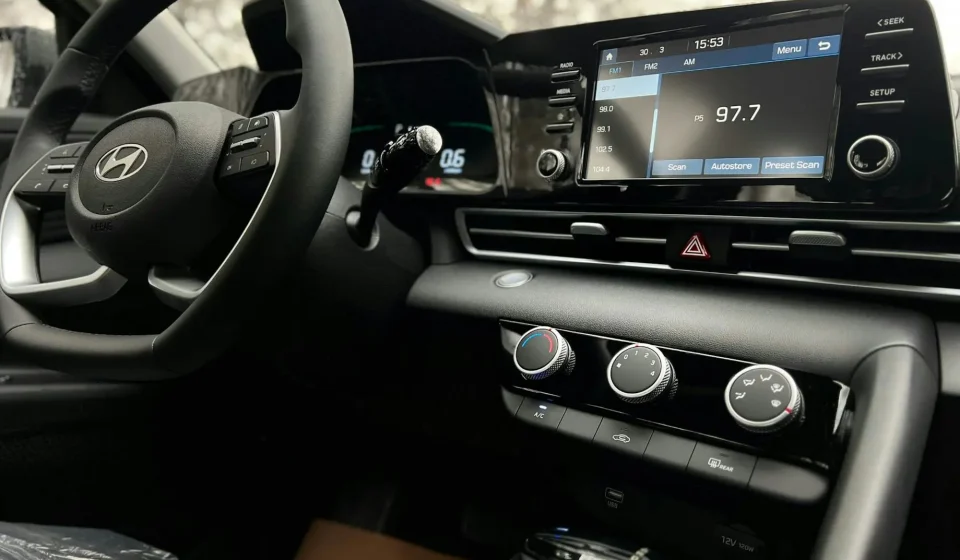
City-friendly cars need interiors that respect quick decisions. Physical controls still matter for common actions because muscle memory works better than menu hunting. A simple volume knob, easy defrost button, and clear climate controls can feel old-school, yet they often beat a screen-first layout in rush-hour traffic.
Storage also matters more than many buyers expect. A secure phone tray, easy cupholder access, small-item bins, and a clean center console keep the cabin from becoming a rolling junk drawer. That sounds ordinary until your parking ticket, sunglasses, charging cable, and coffee all compete for the same tiny space.
The best cabins create order. You do not notice that order on a test drive around the dealership. You notice it after three weeks of errands, school pickups, drive-through lines, and late meetings.
How Driver Assistance Tools Reduce Fatigue on Short Trips
Driver assistance tools help even when the trip is only twelve minutes. Fatigue does not come only from distance. It comes from constant scanning, braking, merging, waiting, and reacting to people who do not drive the way you wish they did.
Stop-and-go assistance can soften that mental load. So can automatic emergency braking, pedestrian detection, and traffic-sign recognition. None of these features should make you passive, but they can reduce the strain of watching everything at once.
A useful car gives you more room to think. It will not make traffic pleasant. No honest person should promise that. But it can keep a normal Tuesday drive from feeling like a test of endurance.
The Best Smart Cars Balance Automation With Human Control
Automation sounds exciting until it behaves in a way you do not expect. Then excitement turns into doubt fast. Urban drivers need technology they can understand, override, and trust. A feature that feels mysterious will not earn long-term confidence, no matter how advanced it looks on a spec sheet.
The strongest approach is balance. Let the car help with blind spots, parking, traffic speed, navigation, braking alerts, and cabin management. Keep the driver clearly in charge. That balance makes the car feel capable without making the person behind the wheel feel removed from the road.
When Automation Helps and When It Gets in the Way
Automation helps when the task is repetitive, predictable, or hard to judge from the driver’s seat. Parking distance, rear cross traffic, speed matching, and blind-spot monitoring fit that category. These are areas where sensors can add valuable awareness.
Automation gets in the way when it becomes too eager. Overactive lane correction on narrow streets can feel annoying. Harsh warnings in normal traffic can train drivers to ignore alerts. A feature that triggers too often loses authority, even when it is right later.
Manufacturers still have work to do here. The goal should not be more intervention. The goal should be better timing. A quiet, accurate alert beats a dramatic one every time.
What Buyers Should Check Before Paying for Tech Packages
Buyers should test technology under real conditions before paying for expensive packages. A short highway loop will not show how a system handles tight parking, glare, school zones, potholes, and crowded intersections. Ask for time with the camera system, parking sensors, phone pairing, voice controls, and driver alerts.
You should also check whether key features require subscriptions. Some connected services work for a trial period, then move behind a paid plan. That does not make them bad, but it should affect your buying decision. A convenient feature feels less convenient when the bill appears later.
The smartest purchase is not the car with the longest feature list. It is the car with the tools you will use every week, in the places you actually drive. Convenient Urban Transportation depends on that practical match, not on technology for its own sake.
Conclusion
The future of city driving will not be defined by cars that shout about intelligence. It will belong to vehicles that make ordinary trips feel less tense, less scattered, and less wasteful. American drivers do not need a rolling gadget showroom. They need help with the real pressure points: parking, traffic, blind spots, navigation, cabin order, and the mental load of moving through crowded streets.
Smart Car Features matter most when they disappear into the rhythm of the drive. You notice them because the trip feels cleaner, not because the dashboard keeps demanding praise. That is the standard worth using before you buy, lease, or recommend any modern vehicle.
Choose the features that solve your daily problems, ignore the ones built only to impress a salesperson, and let your next city car earn its space one calm mile at a time.
Frequently Asked Questions
What smart car features are most useful for city driving?
Parking sensors, 360-degree cameras, blind-spot alerts, automatic emergency braking, and live traffic navigation usually help the most. These features address the daily pressure points of urban driving: tight spaces, sudden stops, pedestrians, cyclists, and unpredictable traffic flow.
Are connected vehicle systems worth paying extra for?
They are worth it when they improve navigation, safety alerts, service reminders, and phone integration without adding distraction. They are less valuable when basic functions sit behind subscriptions or require too many screen taps during normal driving.
How do driver assistance tools improve urban safety?
They add another layer of awareness around the vehicle. Blind-spot monitoring, pedestrian detection, rear cross-traffic alerts, and automatic braking can help drivers react sooner when visibility is poor or traffic conditions change fast.
What makes city-friendly cars different from regular cars?
City-friendly cars usually offer easier parking, better visibility, efficient size, responsive low-speed handling, and technology that reduces stress in crowded areas. The best ones feel simple to place on the road and easy to manage in tight spaces.
Do smart cars make parking easier for new drivers?
Yes, many do. Rear cameras, front sensors, automatic parking guidance, and overhead camera views can help new drivers understand distance and positioning. Practice still matters, but these tools reduce guesswork and help build confidence.
Should I choose a bigger screen or better safety features?
Better safety features should come first. A large screen can be helpful, but it does not matter much if alerts, camera views, and core controls are poorly designed. Practical safety support brings more value than screen size alone.
Can urban driving technology reduce fuel or battery waste?
Yes, route planning, traffic-aware navigation, regenerative braking displays, and smooth speed management can reduce wasted energy. The biggest gains come from avoiding heavy stop-and-go routes and driving with fewer sharp acceleration and braking patterns.
What should I test before buying a car for city use?
Test parking visibility, camera clarity, phone pairing, alert sounds, turning radius, seat comfort, and how easily you can use climate and navigation controls. A city car should feel natural in tight spaces, not only impressive on paper.